Will Insurance Cover a Panniculectomy? What You Need to Know

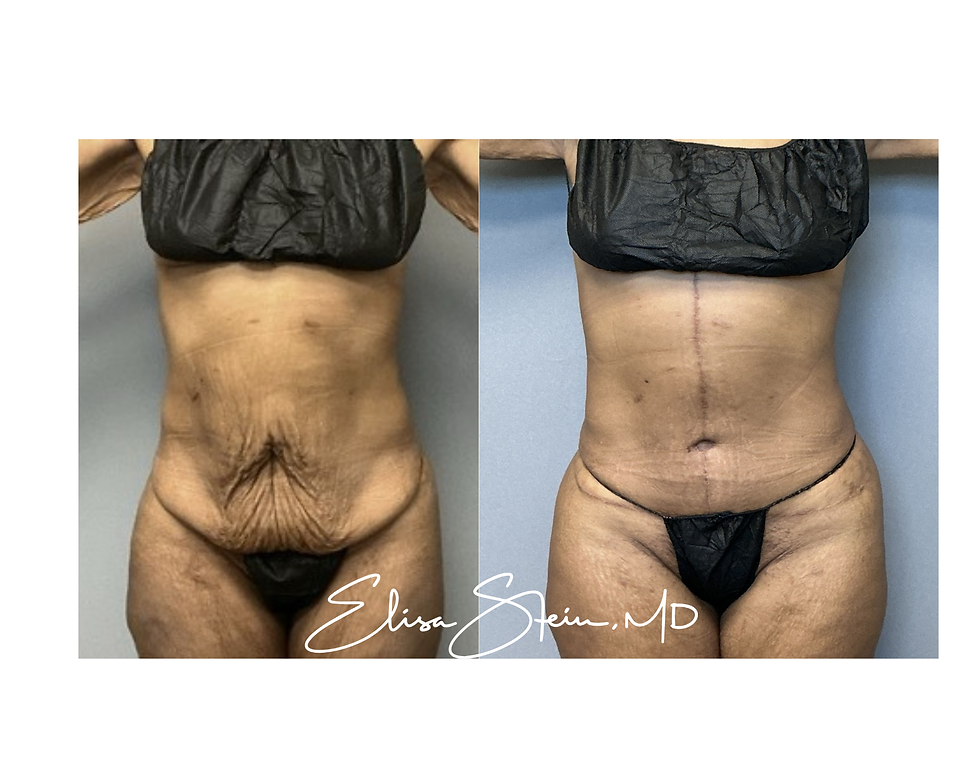
When excess abdominal skin becomes more than a cosmetic concern
One of the questions I hear from patients after significant weight loss is:
“Will my insurance pay to remove all of this extra skin?”
The answer is: sometimes.
Most plastic surgery performed to improve body contour is considered cosmetic and is not covered by health insurance. But there is an important exception. When a large amount of excess skin and tissue hangs over the lower abdomen and causes documented medical or functional problems, removal of that tissue—a procedure called a panniculectomy—may qualify for insurance coverage.
The important word is may.
Insurance companies have very specific definitions of medical necessity, and simply having loose skin after pregnancy or major weight loss usually isn't enough to qualify.
What Is a Panniculectomy?
A panniculectomy removes the hanging apron of excess skin and fat from the lower abdomen, called the pannus or panniculus.
This can become particularly significant after major weight loss from bariatric surgery, lifestyle changes, or medications such as GLP-1s. In some patients, the excess tissue doesn't simply affect how clothing fits—it can contribute to chronic rashes, recurrent infections, skin breakdown, difficulty with hygiene, and limitations in everyday activities.
In those circumstances, removing the pannus may be considered reconstructive or medically necessary rather than purely cosmetic.
Panniculectomy vs. Tummy Tuck: They Aren't the Same Operation
This distinction is important, especially when insurance is involved.
A panniculectomy is primarily designed to remove the overhanging skin and tissue of the lower abdomen. It generally does not include tightening separated abdominal muscles, reshaping the waist, liposuction for contouring, or the other aesthetic components commonly associated with a tummy tuck.
An abdominoplasty, or tummy tuck, is designed to improve the overall contour of the abdomen. Depending on the patient, it may remove excess skin, tighten the abdominal wall or repair rectus diastasis, reposition the belly button, and be combined with liposuction.
Because those goals are primarily aesthetic, tummy tucks are generally considered cosmetic and are not covered by insurance.
I've written more about the differences in my blog Which Tummy Tuck is Right for You, which can help you understand why the two procedures shouldn't be used interchangeably.
So, When Might Insurance Cover a Panniculectomy?
Every insurance policy is different, so there is no universal checklist that guarantees approval.
However, several requirements appear repeatedly in insurance coverage policies.
1. The pannus usually has to hang low enough
Many insurers require documentation showing that the pannus hangs to or below the level of the pubic area. Photographs are often part of the prior-authorization process.
Simply having loose or wrinkled abdominal skin may not meet this requirement.
2. There needs to be a medical problem—not just a cosmetic concern
This is where documentation becomes especially important.
Insurance companies may look for problems such as:
Chronic rashes or intertrigo underneath the abdominal fold
Recurrent skin infections or cellulitis
Skin ulceration or breakdown
Difficulty maintaining hygiene
Functional limitations or interference with activities of daily living
Wanting clothing to fit better, disliking the appearance of loose skin, or wanting a flatter abdomen are completely understandable reasons to consider surgery—but they generally do not establish medical necessity for insurance purposes.
3. You may need to show that medical treatment hasn't worked
This is something many patients don't realize until they begin the insurance authorization process.
If you have been treating recurrent rashes yourself with powders, creams, or other over-the-counter products but have never discussed the problem with your physician, there may be very little documentation in your medical record.
Many insurance policies require evidence that skin problems have persisted despite appropriate medical treatment for a specified period of time. Some current policies, for example, require documentation of approximately three months of unsuccessful medical management.
That treatment might include prescription antifungal medication, topical steroids, antibiotics, or other treatment recommended by your physician depending upon the condition.
If you're having recurrent problems underneath your abdominal fold, tell your primary care physician or dermatologist.
Don't wait until your plastic surgery consultation to mention a rash you've been treating at home for two years. Your medical record matters.
4. Weight stability may matter
If the excess skin developed after significant weight loss, your insurer may also have requirements regarding how long your weight has been stable.
Some policies require weight stability for at least six months. Patients who have undergone bariatric surgery may have additional waiting-period requirements; for example, some policies require patients to be at least 18 months out from bariatric surgery with stable weight before panniculectomy is considered.
These requirements vary, which is why your individual insurance policy needs to be reviewed.
Documentation Is Often the Most Important Part
Insurance approval isn't based only on what I see during your consultation. It's based on whether the documentation submitted demonstrates that you meet your insurance company's definition of medical necessity.
That may include medical records documenting recurrent symptoms and treatments, prescription history, photographs demonstrating the position and extent of the pannus, documentation of weight loss and weight stability, and my examination and surgical recommendation.
This is one reason I encourage patients who are experiencing problems from excess skin to start documenting them early.
If you develop another painful rash, don't simply treat it at home and forget about it. Seek appropriate medical care and make sure the problem—and the treatment—is documented.
Does Losing a Large Amount of Weight Automatically Qualify You?
No.
This is especially relevant now that we're seeing more patients achieve significant weight loss with GLP-1 medications.
Whether you lost 50, 100, or 150 pounds through bariatric surgery, medications, diet and exercise, or a combination of approaches, the amount of weight you lost by itself doesn't determine insurance coverage.
Insurance is generally looking at what the remaining pannus is doing to your health and function—not simply how much weight you lost or how much loose skin remains.
You can have significant excess skin after weight loss and still not meet your insurance company's medical-necessity criteria.
What If I Want More Than a Panniculectomy?
This is another important conversation to have with your plastic surgeon.
The operation insurance may consider medically necessary isn't necessarily the same operation you would choose if your goal were the best possible abdominal contour.
You may also be concerned about muscle separation after pregnancy, fullness of the upper abdomen or flanks, the appearance of your belly button, or the overall shape of your waist.
Those concerns may be better addressed with an abdominoplasty and possibly liposuction—but those additional components are generally considered cosmetic.
In some situations, there may be options for combining medically necessary and cosmetic treatment, but this depends upon the surgical plan, insurance rules, facility, and surgeon. Any cosmetic portion would generally remain the patient's financial responsibility.
That's why I think it's important to start with a different question than simply:
“Can insurance pay for my surgery?”
The better questions are:
“What operation do I actually need, and which parts—if any—does my insurance consider medically necessary?”
What Should You Do Before Scheduling a Consultation?
If you're hoping to use insurance coverage for a panniculectomy, start by calling your insurance company and asking whether panniculectomy is a covered benefit under your specific plan and what medical-necessity criteria apply.
Then start gathering your records.
Keep track of physician visits for rashes, infections or skin breakdown; treatments and prescriptions you've tried; how long the problems have persisted; your weight-loss history; and how the pannus affects hygiene, mobility or normal daily activities.
The goal isn't to create symptoms that aren't there. It's to make sure the symptoms you are experiencing are accurately reflected in your medical record.
And What If Insurance Says No?
A denial doesn't necessarily mean there are no options. Sometimes additional documentation is requested or an appeal may be appropriate.
But there are also situations in which a patient simply doesn't meet the medical-necessity requirements of their policy. In that case, removal of the excess skin would be considered cosmetic, and we can discuss whether panniculectomy, tummy tuck, or another approach makes the most sense for your anatomy and goals.
Not Every Woman Needs a Mommy Makeover
One of the most important parts of my job is helping patients understand what surgery they actually need. Some women benefit from a comprehensive mommy makeover, while others need only one procedure. For patients whose primary concern is excess abdominal skin, a panniculectomy may be worth considering—particularly when that skin causes medical problems. The goal is always to choose the procedure that addresses your concerns safely and appropriately, rather than assuming you need a more extensive operation.
The Bottom Line
A panniculectomy can sometimes be covered by health insurance, but having excess abdominal skin alone generally isn't enough.
Insurance companies typically want evidence that the pannus is causing a documented medical or functional problem, that appropriate nonsurgical treatment has been attempted when applicable, and that the patient meets the specific requirements of their individual policy.
And remember: insurance coverage and the ideal cosmetic surgical plan are two different questions.
If you're struggling with excess abdominal skin after pregnancy or major weight loss, a consultation can help determine whether you need a panniculectomy, tummy tuck, or another type of body-contouring procedure—and whether pursuing insurance authorization may be appropriate.
At Stein Aesthetic & Plastic Surgery, we can evaluate your anatomy, discuss your goals, and help you understand the difference between medically necessary skin removal and cosmetic abdominal contouring.
And a little something extra for Black Friday!
If you've been thinking about surgery, this may be a great time to take the next step. We're offering $750 off surgery for new patients as part of our Black Friday special!

Insurance policies and medical-necessity criteria vary by carrier and individual plan. Coverage cannot be guaranteed, and patients should verify benefits and requirements directly with their insurance provider.


Comments